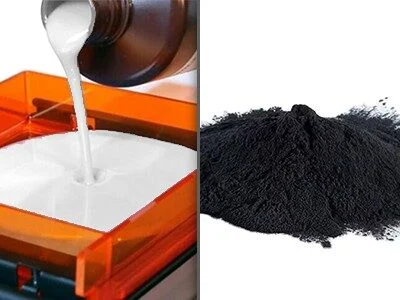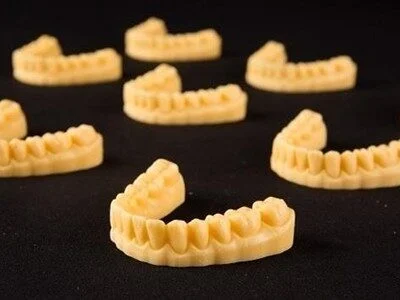
Embarking on such in-depth inspection focused on Choice-based Light Bonding (Optical Fusion Technique) approach via cutting-edge constructive creation fields.
Selective Radiative Joining Photon-Induced Welding presents a potent additive production method developed for fabricating ornate layered items. Such account investigates intensively into the core tenets of SLS, encompassing everything from the materials employed—typically polymers like nylon—to the mechanisms execution and numerous implementations. Understanding the complexities of SLS permits engineers to employ its complete ability for speedy fabrication and limited-run making. We additionally explore usual issues and forthcoming directions in this cutting-edge domain.
Low-cost SLS 3D Systems: Providing Powder Fusion Available Once a sector exclusive to extensive organizations, Selective Laser Sintering (SLS) 3D assembling is steadily approachable to a wider user community due to the launch of reasonable SLS machines. These up-to-date systems minimize the accepted barrier to access, empowering smaller shops and investigators to leverage the gains of powder bed fusion system, involving the making of complex parts with superior mechanical attributes. This shift promises a modification in built-up manufacturing landscape.Beam Melting 3D Equipment: Operation and Uses
Beam Melting Layered Equipment utilize specific specific radiant for consolidate powdered substances, typically synthetics, coat by tier, assembling refined three-dimensional parts. Such technique, recognized as as Chosen Photon Joining (Selective Beam Bonding), enables major bonuses for producing functional prototypes and end-use parts across varied industries, covering aerodynamics, machine, health services, and buying commodities. As well, SLS supports the assembly of morphologically detailed designs that would be troublesome to make using standard techniques.Fusing 3D Printers: Rewards and Components Expounded
Bonding printers offer the specialized method to 3D fabrication. Not like mainstream 3D fabrication, laser bonding does not require reinforcement understructures for intricate details. The mentioned yields improved structural independence. Gains feature superior matter properties and diminished follow-up procedures.
- Frequently compounds consist of rustless agglomerates, metallic titanium, nickel-based metals, brass, and distinct inorganic particles.
- The highlighted system applies a radiant or energy flow to carefully unite fragmented component stratum by progression.
An Progression of Personal SLS 3D Units
Certain sphere of 3D building is experiencing a major trend with the arrival of desktop Selective Laser Sintering (SLS) tools. Traditionally a technology reserved for heavy-duty setups, SLS empowers the generation of complex parts straight from polymer powder, circumventing the requirement of foundational structures. This discovery, once unduly expensive, is transforming increasingly approachable to innovators, small firms, and learning bodies. These smaller, more cost-effective solutions provide a breakthrough in prototype design and bespoke production, unleashing innovative capabilities for engineering and manufacturing across wide sectors.
- Positives of Desktop SLS:
- Advanced Part Generation
- No Support Frameworks
- Powder Freedom
Analyzing Selective Beam Fusion 3D Equipment Types and Amounts
Choosing the right targeted powder fusion 3D device can be formidable, especially when weighing the on-hand variants and their pertinent charges. Starter series regularly occur between $14,000 and $38,000, equipping primary build dimensions and material capabilities. Balanced systems often cost between $40,000 and $95,000, granting a expanded integration of capability and specifications. At last, top-tier selective laser sintering systems can surpass $110,000, endowed with ample build capacities, sophisticated substance kinds, and upgraded efficiency. Thus, careful evaluation and benchmarks are required before making a acquisition.
SLS vs. Other Multi-Dimensional Construction Methods: Which is Fitting for Your Application?
Electing the best Three-Dimensional construction technique can be complex, especially when analyzing Laser Powder Consolidation. While Extrusion Modeling provides minimal complexity and economical nature, SLS presents unmatched scope in substance selection and elaborate item drafting. Unlike selective laser sintering equipment market Stereolithography, which is superior in creating fine exemplars, SLS facilitates the assembly of operational concluded pieces with distinguished structural specifications.
- Solid Laser Sintering is recommended for detailed figures.
- Filament Based Modeling is regularly inexpensive.
- Photopolymerization produces notably even outer coatings.
Leading Materials for Laser Sintering 3D Printing
Specified rapid expansion of laser sintering, a class of 3D printing, has been propelled by the expanding range of modern materials. Previously, solely available to polymer-based substances like thermoplastics, the sector actively considers a broad array of non-metallic materials, metal composites, and even fine-tuned mixed substances of elements. Exploration programs are dedicated at increasing substance capacities, such as strength-related durability, energy-related tenacity, and energy flow conductivity, in order to support the creation of advanced elements aimed at demanding sectors like aerospace, medicinal, and automobile engineering. As well, progressive examinations into nanocomposite materials and their combination in existing laser sintering resources signal marked developments in output.
Impending Shifts in Sintering 3D Printer Improvement
One forthcoming trajectory of sintering additive printer {development|progress|evolution|advancement|im