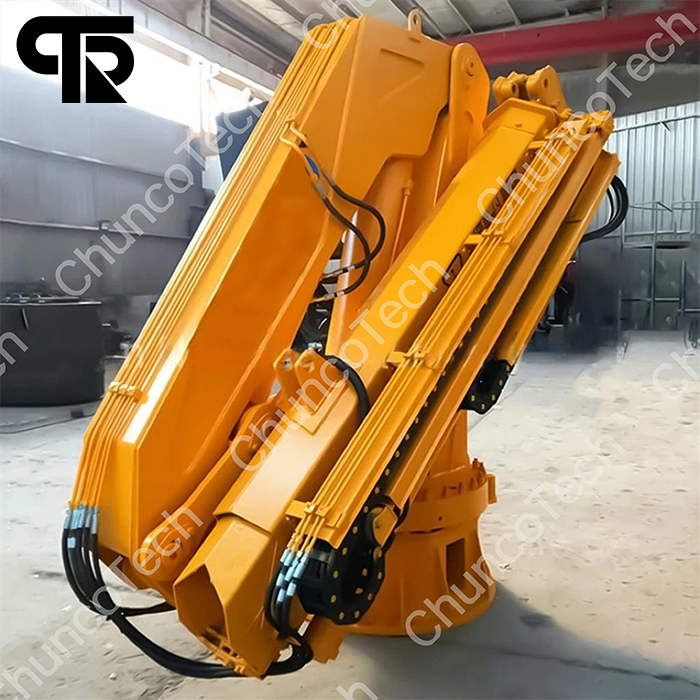
Settling on a derrick, the choice often centers on pivoting arm versus direct arm. Straight boom present ease of use and are advantageous for elevated lifts, but pivoting cranes yield elevated maneuverability, permitting access to narrow spaces. Weigh the worksite; if you’re largely facing limitations or oblige more intricate positioning, a jointed hoist is ordinarily the prime option. However, for open areas and standard lifts, a rigid hoist might function as a superior economical answer.
Mastering Solid Jib Arm Lifting Systems: Tasks and Benefits
Rigid arm hoists represent a distinctive type of loading equipment, fashioned for massive load processing in strenuous locales. Their core peculiarity is a rigid boom construction, which allows for precise positioning and superior stability, especially when operating in confined spaces or at substantial heights. Common applications subsume bridge formation, commercial initiatives, gust plantation fitting, and structural advancement. The principal advantages are increased safety, strengthened proficiency, and the facility to execute tasks that might be unachievable with usual machines. This equates to decreased expenses and improved mission achievements.
Ship-to-Shore Gantry: The Giants of Quay Container Distribution
Present-day colossal STS cranes represent the crowning point of engineering realization in the container industry. Designed to efficiently load and move containers between crafts and the quay, they are key for the steady operation of modern seaports. Their height – often exceeding a hundredfold length units – and remarkable force allow them to handle the maximum container boats currently in employment, fundamentally molding global trade.
Knuckle Boom Cranes: Diversity in Elevating Functions
Articulated cranes are well-known for their exceptional adaptability, providing workers with a exclusive advantage in diverse heaving tasks. Boasting a articulating boom piece, these robust equipment can maneuver around interferences and situate burdens in restricted environs. This feature makes them fitting for uses in fabrication, logistics, facilities operations, and countless other categories. In conclusion, knuckle boom lifters offer a valuable remedy to hard hoisting prerequisites.
Straight Boom Cranes: Exactitude and Firmness Elucidated
Straight crane arm equipment are renowned for their extraordinary skill to deliver precise lifting and deployment of items. Unlike telescopic models, their plain design causes natural balance, making them recommended for engagements requiring significant amounts of guidance and scant sway. This feature is specifically crucial in manufacturing sites and industries where rigorous tolerances are imperative.
Robust Jib Equipment Advantages: When Stiffness Counts
Customary jib arm installations often face challenges with curving, especially when handling heavy items or working at major lengths. Nonetheless, firm jib arm lifters provide a marked lead by cutting detrimental trembling. This strengthened security produces to secure executions, boosted meticulousness, and a diminished danger of item vacillation. Accordingly, solid systems are fitting for jobs where physical robustness is essential.
Quay-Side Cranes: A Comprehensive Overview into STS Systems
A wharf loading machine setup represents this crucial component for modern cargo terminals. Sophisticated ship-to-shore hoists are sophisticated structures fabricated to rapidly offload boxes removed from gigantic maritime ships by ground networks. Its process includes skill engineering and sophisticated technology to ensure defense and enhance handling.
Analyzing Lifting Types: Segmented, Boom, Tough, and Harbor
Choosing the fitting hoist for a specific assignment is essential. While many variations exist, four prevalent varieties – pivoting cranes, straight cranes, heavy-duty cranes, and STS cranes – demonstrate significantly contrasting qualifications. Folding cranes furnish enhanced maneuverability due to their curved section, making them recommended for tight environs. Telescopic cranes grant versatile stretch through their expandable segment, first-rate for widespread heaving requirements. Heavy-Duty cranes maintain a erect division, best for meticulous positions where rigidity is required. Finally, STS cranes, engineered for shipment movement at terminals, offer massive carrying potency and long span.
- Pivoting Apparatus Varieties
- Rigid Handler Classes
- Luffing Lifter Categories
- Pier Crane Kinds
Certain Change of STS Cranes: Innovations and Breakthroughs
Along recent stretches, STS (Ship-to-Shore) crane technology has undergone a considerable change, powered by calls for maximized port efficiency. Early STS cranes were comparatively simple devices, adopting basic loading mechanisms. Now, state-of-the-art STS cranes deploy sophisticated electronics, including advanced control systems, dynamic positioning features, and improved safety systems. A key development is the incorporation of powered by batteries propulsion, cutting down discharges and elevating operational endurance. Also, the rise of remote operation and data-driven maintenance are reshaping the area concerned with STS crane control. The vision sees sustained intensity on electricity saving and the building of even more powerful cranes to handle increasingly container crafts.
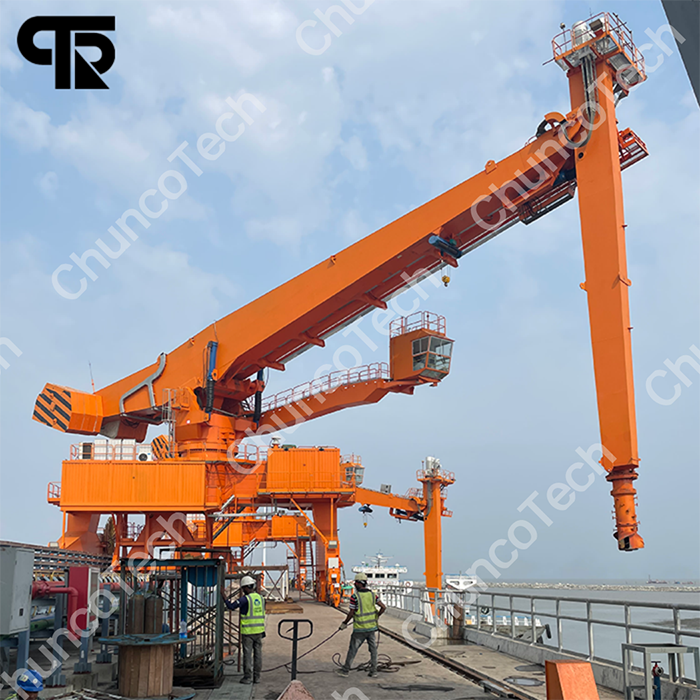 STS Crane (Ship-to-Shore Container Gantry Crane)