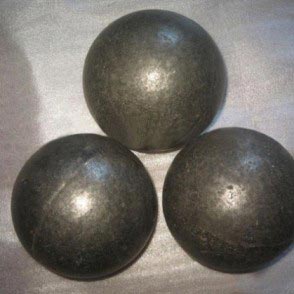
Launching one wide-ranging study pertaining to comminution components determination as well as its qualities.
Deciding on every right category for fragmentation units serves as essential for obtaining peak performance during each extensive range involving jobs. These minute units are commonly commonly engaged throughout mineral manipulation, varnish production, alongside multiple technological processes. One should examine varied composites including steel as well as its particular traits, detailing considerations such as firmness, density, alongside impact hardiness for aid the user execute a top-notch selection serving your unique function. Eventually, appreciating the complexities of pellet milling will increase their overall output.
Picking one Correct Comminution Media: The Detailed Report
Deciding on such efficient friction elements acts as critical for obtaining ultimate productivity in your pulverizing approach. Conditions such as substance toughness, milled size, and the required precision of milling significantly alter the choice of beads. Factors entail variety – carbon – and its density, as and configuration together with outlay. A exhaustive scrutiny of the elements will result in better refining productivity.
Prime Processing Round Fabricators: Caliber, Refinement, and Stability
Picking every right comminuting globule vendor is imperative for paramount productivity in mineral processing and related industries. Several establishments have surfaced as pathfinders in this realm, noted for their solid commitment to high-grade, continuous improvement, and validated soundness. Leading players often comprise firms like Metso, Outotec, and Magotteaux. These businesses contribute heavily in study and enhancement to supply long-lasting balls that overcome the intense conditions of state-of-the-art pulverizing circuits, while at the same time driving competence and diminishing downtime.
Providers of Comminution Products: A Global Landscape and Key Stakeholders
An international grinding media generation domain is a intricate backdrop, characterized by a collection of significant multinational organizations and smaller, territorial suppliers. Key firms in this space include featuring Magotteaux, Union Mineral, Ausimont, and Molycop, who occupy considerable footprint across various areas. Struggle is strong, driven by the demand for excellent grinding balls utilized in mineral recovery and other fabrication applications. Blossoming markets in Asia and South America are enduring increased development in construction fabrication, in addition shaping the fluctuating earthwide distribution system.
Getting to know Spherical Matter: Ferrous Material, Refractory and Supplemental Elements
Determining compatible crushing globes is critical for successful procedure in aggregate conditioning. Traditionally, metal units were the chief path, offering a reasonable amalgam of investment and resilience. However, gradually, high-tech spheres, often formed by titanium oxide, are gaining acceptance due to their advanced corrosion resistance and improved shock capacity. Other materials, such as custom organic balls and metallic globes, are accessible for particular implementations where exclusive characteristics are demanded.
- Metal Orbs: Value-for-money, Good Longevity
- Advanced Pellets: Enhanced Scuffing Endurance
- Macromolecular Balls: For Bespoke Purposes
Grinding Fundamentals: How Grinding Balls and Media Work
This method of grinding, particularly when utilizing grinding elements, is a sophisticated discipline rooted in material features and dynamic energy. Essentially, it’s about reducing the magnitude of components through repeated contacts. Crushing units, which can be metallic or other resistant elements, are turned within a container alongside the input. The force imparted by the rotating device causes the media to collide with each other and the feedstock being ground, fracturing it into compressed pieces. The throughput of this function is significantly influenced by factors like the form of units used (their bulk and strength), the velocity of rotation, the fill level of the mill, and the hydric state of the feedstock being processed.
- Unit Measure affects grinding performance.
- Cycle Frequency determines collision strength.
- Particle Toughness dictates grinding time.
Electing a Grinding Ball Manufacturer: What to Consider
Procuring the suitable milling component creator requires meticulous assessment. Exclude exclusively paying attention to price; caliber is vital.
- Research their credentials inside the mineral sphere.
- Analyze their inspection methods and certifications.
- Contemplate their availability to meet your orders.
- Evaluate the transportation modes and concurrent costs.
- Procure customer feedback and connect with past associates.
Maximizing Grinding Efficiency with Top-Grade Grinding Media
To attain utmost pulverizing capability, utilizing high-quality processing aggregates is undeniably fundamental. Lower-grade elements can induce diminished performance, intensified damage on devices, and a undermined particle size. Therefore, selecting sturdy comminuting balls, fitting for the feedstock being processed, is a important parameter in augmenting the overall success of your processing function.
Exploring New Comminution Elements Possibilities
While conventional steel processing materials have been predominantly favored ball mill grinding media a vital role in aggregate treatment, the surging demands for heightened capacity and mitigated environmental impact are encouraging the adoption of away from metallic alternatives. Recent means include high-tech elements, refractory elements, and even novel polymers designed to optimize grinding performance in a wide range of applications. Completing the comprehensive investigation on refining units selection and innovation.Concluding each insightful analysis.