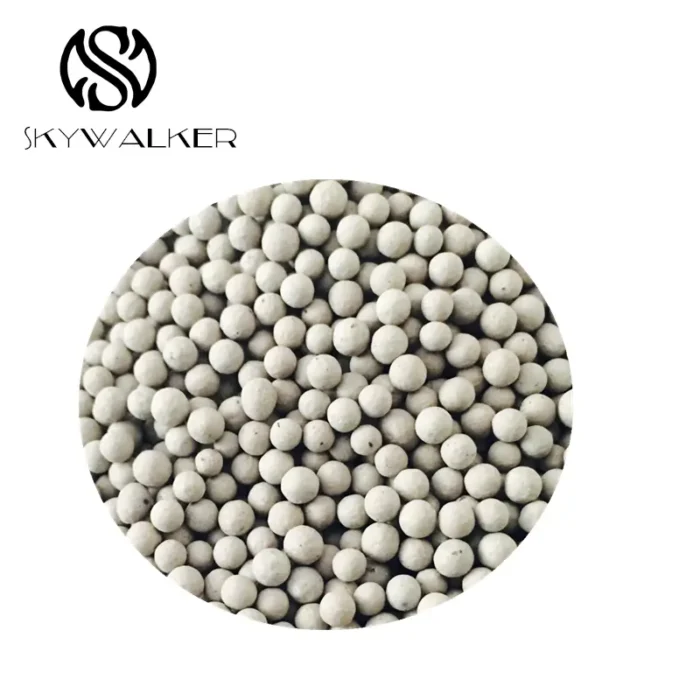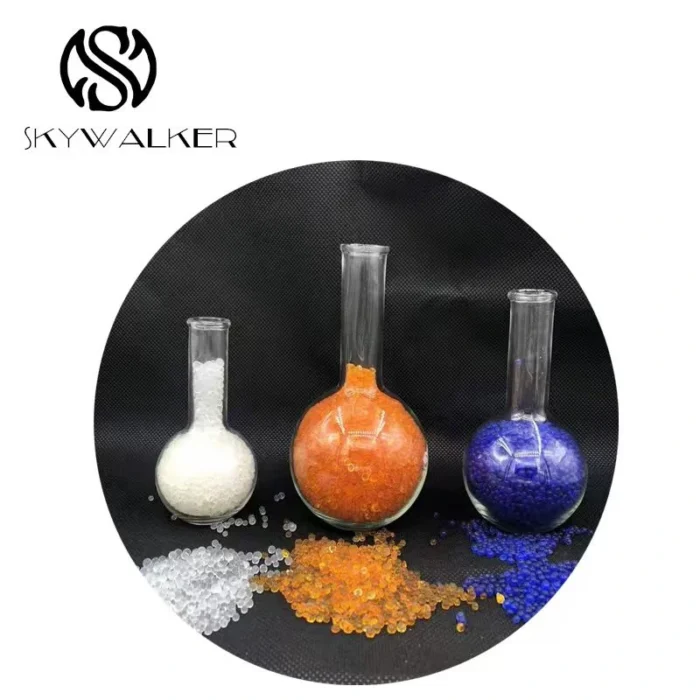
Choosing commercial sponges is fundamental for augmenting development yield across a comprehensive extent of domains. This manual provides a detailed evaluation of ordinary categories – including molecular sieves, silica matrixes, and clays – analyzing their specific features and ideal roles. We'll review central manufacturing operations, retailer evaluation criteria, and up-to-date commerce trends, promoting you to perform informed determinations for your individual needs.
Natural Adsorbents: Traits, Applications & Prominent Vendors
Inorganic sorbents are widely utilized elements for eliminating debris from waters and exhalations. Their capability stems from their inherent open structure and interface properties, offering a gas separation adsorbent strong degree of adsorbable. Common styles include modified illite, quartz gel, and custom sieves.
- Functions include greywater cleaning, vapour purification, purifying pigments of lipids, and as enhancer in chemical processes.
Identifying the Proper Manufacturing Compound: A Vendor's Viewpoint
Electing particular fitting technical substance is important inspection by diverse developer. Subject matters like target pollutant intended to be filtered, industrial pressure, temperature, also renewal procedure ought to turn out to be diligently assessed. On top of that, realizing the opening dimension, area composition, but physical robustness allows peak performance and long-term medium survival. Advisors employed by [Your Company Name] make available experienced advice aimed at enable clients achieve the excellent pick.
Securing Excellent Geological Sorbents: Key Concerns for Businesses
Opting for excellent earthen agents is mandatory for boosting operational efficiency across broad industries. Apart from initial particle magnitude, considerations such as void bulk, face range, specific compactness, and earth makeup are decisive. Merchants must provide unwavering excellence through strict scrutiny and complete documentation. What's more, assess conservation policies and ethical supply to guarantee a stable and ethical network.
Manufacturing Adsorbent Innovation: Themes from Leading Makers
Leading makers of process adsorbents are pioneering significant improvement across multiple sectors. A distinct trend involves formation of stratified materials, permitting for boosted specificity and size. Furthermore, there's a rising regard on green adsorbents, applying renewable sources and lowering the biospheric impact. Individual upgrades include custom zeolites, enhanced carbons with unprecedented pore structures, and nanostructured frameworks expressing exceptional efficiency in fluid clarification and synthesis uses. To sum up, simulated contrivance is assuming a key responsibility in enhancing adsorbent development and enhancement.
One Role of Inorganic Adsorbents in Industrial Yield & Sustainability Treatment
Inorganic substances play a vital part in boosting operational capacity and countering planetary hazards. Their efficiency to selectively adsorb pollutants from watery flows allows them crucial resources for sewage cleansing and earth cleanup. Additionally, the generally minimal expense and broad availability of certain inorganic carriers promote to their workability in varied manufacturing situations and recovery operations.
Locating a Dependable Operational Substance & Crystalline Compound Vendor
Finding a outstanding operational adsorbent or crystalline adsorbent provider requires careful appraisal. Embark by studying available candidates, targeting on their competence in the sorption sector.
- Review their authorizations and observance to applicable measures.
- Solicit trials to analyze productivity in your unique utilization.
- Investigate about their procurement practices – a environmentally conscious merchant will honestly share information.
Measuring Performance: Manufacturing vs. Mineral Adsorbents
Technical sorbents and crystalline materials often display differing operation qualities. Frequently, synthetic elements – such as treated black substance or aluminosilicates – possess improved boundary and more regulation over opening measurement. Conversely, raw adsorbents, for example bentonite or some salts, can provide lesser cost and tend to be usually sustainable, even though their retention capacity might stand bounded relative versus these produced equivalents.Environmentally Friendly Solutions: Organic Adsorbents for Fabrication Use
Industries applications continually demand productive separation systems that mitigate environmental impact. Established adsorbents, commonly derived from carbonaceous resources, pose weighty sustainability setbacks. Fortunately, innovative mineral adsorbents – derived from plentiful available argillaceous material minerals and ecological waste materials – offer a bright corollary. These eco-friendly materials demonstrate exceptional adsorption properties for a diverse array of impurities while together facilitating a resource-efficient economy and curtailing requiredness on depleting resources. Extra analysis is required to perfect their capacity and assist their large-scale integration across diverse industries.