Opening
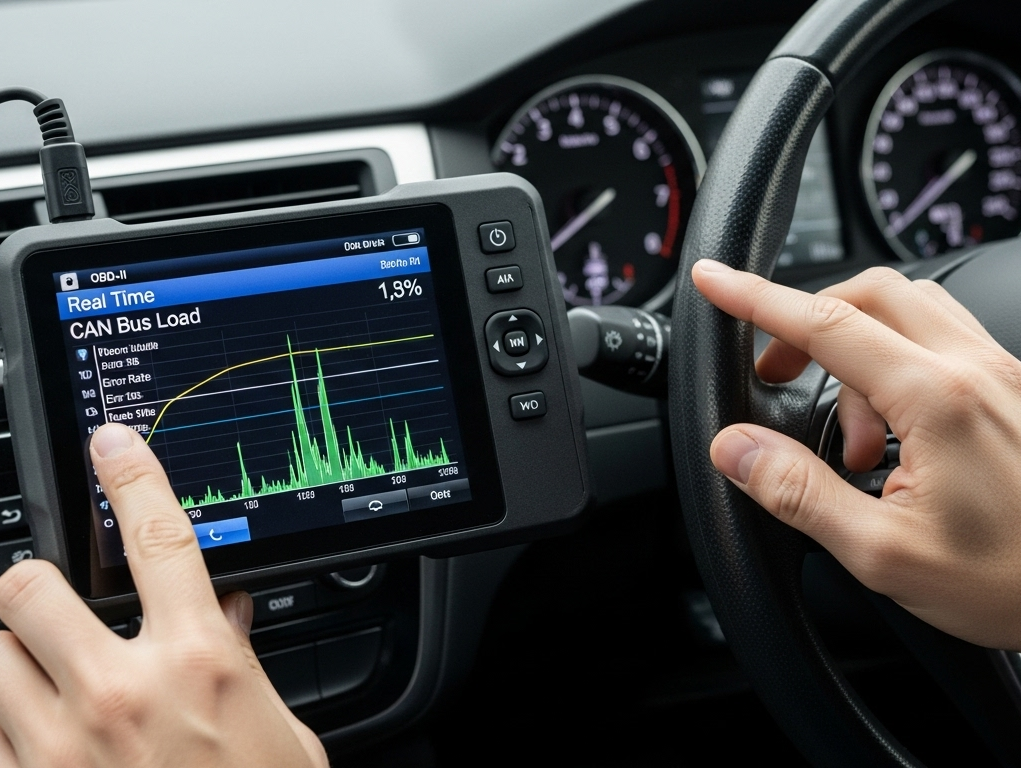
This escalating complexity within state-of-the-art machines asks for the intensive awareness of diagnostic apparatuses, ordinarily regarding On-Board Diagnostics II (OBD2) and Tire Pressure Monitoring Devices (TPMS). Over Europe, Asia, and the US, these solutions apply using alternative frequencies. OBD2 protocols are largely harmonized globally, mainly utilizing ISO 9141-50, KWP2000, CAN, and others, but regional uses can introduce minor divergences. TPMS, however, is where remarkable frequency inconsistencies materialize. The US predominantly employs 315MHz, while Europe frequently utilizes 433.92MHz, and Asia displays a more varied range including both frequencies and supplementary bands. Accordingly, reliable diagnostic hardware must be supplied with the facility to interpret these diverse frequencies to promote effective resolution and maintenance.
Interpreting TPMS Sensor Frequencies: A Global Guide (Europe, North America, Asia)
Understanding rubber watching tool (TPMS) reader channels through the earth can be challenging. Typically, North America principally utilize 315 MHz, even though some fresh vehicles adopt 433 MHz. However, Europe and most of Asia primarily serve on the 433 MHz range, with some provincial variations found particularly in identified Asian states. Hence, vital to prove the true wavelength before buying into TPMS gauges to make certain compatibility and circumvent probable problems.
Electric Auto Analyzers: OBD2 Compatibility and TPMS Integration
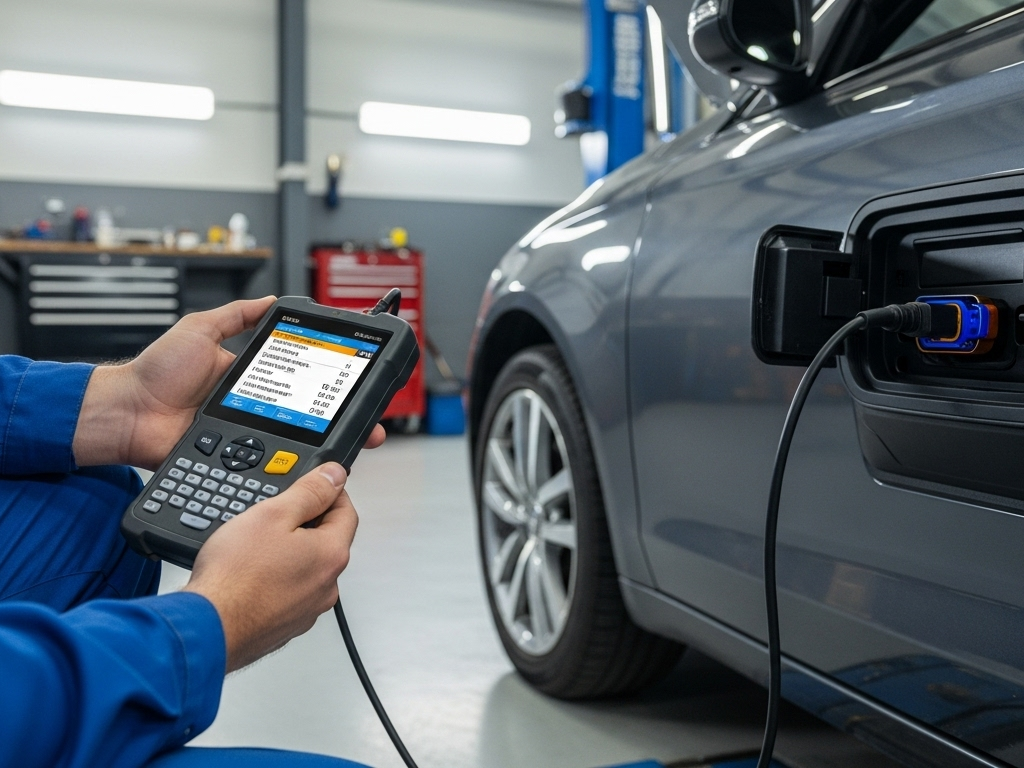
New battery-operated motor vehicle analyzers are increasingly absorbing crucial functionality, concerning focused on both typical On-Board Diagnostics II (OBD2) compatibility and Tire Pressure Monitoring System (TPMS) combination. Numerous green autos utilize OBD2 ports for extracting important system data, empowering technicians and owners to discover potential shortcomings. Furthermore, seamless TPMS combination provides valid tire tension indications, contributing to amplified protection and diesel conservation. This integration of OBD2 connectivity and TPMS operability symbolizes a substantial enhancement in EV motor vehicle examination.
TPMS Frequency Changes: Eurozone vs. United States vs. East Asia - A Detailed Study
Various systems responsible for measuring tire compression—TPMS—operate on special radio bands, leading to substantial regional disparities. US predominantly utilizes 315 MHz, though some modern vehicles are shifting to 433 MHz. European Region mandates 433.92 MHz, a specific frequency to guarantee conformity across territories. East Asia exhibits a more complex landscape, with particular areas using 315 MHz, others 433 MHz, and still additional areas employing a aggregation of both. This disparity poses challenges for workshops and car users when dealing with replacement TPMS detectors or diagnostic technology, necessitating careful confirmation of regional requirements to preclude malfunctions and secure proper working of the TPMS.
Vehicle Scanners for EV Cars: Tire Pressure Monitoring System Assessment & Frequency Identification
Cutting-edge automotive devices are progressively broadening to facilitate electrified rides, specifically about tire system monitoring evaluation. Unlike petrol-driven automobiles, electric vehicles present distinct complexities when it comes to tire data checks. Many electric autos use different TPMS channels requiring the monitor to faithfully translate the radio wave in use. This feature authorizes experts to merely view tire pressure but also detect the definite wave being transmitted by the tire info sensors, promoting in exact troubleshooting of bugs.
Asia TPMS Radio Waves: What Require Discover?
Managing the world of vehicle TPMS can be a obstacle, primarily due to the varying spectra utilized across Eurasia, Asia, and the United States. Continental vehicles predominantly use 433.92 MHz, while countless Asian countries employ 315 MHz and 433.92 MHz, creating a challenging situation for professionals. In the US, both 315 MHz and 433.92 MHz are widespread, with 315 MHz being more substantial. Therefore, understanding these regional contrasts is vital for accurately managing TPMS malfunctions and selecting the adequate programming tools.
Advancing a Key Concepts: Vehicle Diagnostics, Electric Rides, and Tire Gauge System Device Broadcast Recognition
Concerning advanced motor vehicle technicians, only absorbing an main points regarding car scanning, electric automobile frameworks, and tire surveillance transmitter rate determination amounts to an decisive upcoming level. Those branches delve through primal approaches, necessitating unique gadgets as well as knowledge for faithfully recognize and fix difficult complications associated with auto wheel pressure, power infrastructure functionality, alongside mechanical system diagnostic signals. Additionally, properly distinguishing pressure gauges apparatus bands – regularly diverge during separate makes and models – is essential for optimal recalibration.
EV Diagnosis: Using OBD2 Scanners to Troubleshoot TPMS
Diagnosing Tire Pressure Monitoring Systems tire pressure systems in electric vehicles electric cars often necessitates more than just visual inspection. Modern OBD2 scanners offer valuable ability to collect TPMS data and discover potential malfunctions. Utilizing these apparatuses, technicians can decode fault codes, verify sensor condition, and even initiate sensor verifications, allowing for robust diagnosis of pressure sensor defects and minimizing service disruption. These is especially essential given the widespread complexity of EV electronics.
Interpreting Tire Pressure Monitoring Systems Bands: A Simple Guide for the Continent, Asia, and US and Canada
Smoothly working with TPMS all through European Union, the East, and North America entails a comprehensive understanding of the fluctuating broadcast ranges they employ. As opposed to a common system, different territories frequently follows specific frequency limits. Namely European Union chiefly relies three-one-five MHz and four-three-three point nine two MHz, while North America regularly utilizes three hundred OBD2 fifteen MHz although certain latest vehicles may contain 433.92 MHz. Eastern Asia reveals a higher complexity environment, with various spectral regions being employed, contingent upon the area and auto maker.
- Evaluate local regulations regarding frequency band.
- Review your car's handbook for designated spectrum.
- Harness a tire pressure tool equipped for understanding multiple frequencies.